

How to Care for a Pressure Sore: A Guide for Users and Caregivers
Posted on04 Jul 2025

Disclaimer: This article is for educational purposes only. All pressure sores must be assessed and treated by a qualified medical professional. Early medical attention is crucial to prevent complications and infection.
You might recall from an earlier blog post that we talk about what pressure sores are and how to prevent them. Let’s do a quick recap: pressure sores also called bedsores or pressure ulcers are injuries to the skin and deeper tissue caused by prolonged pressure, often developing in individuals who sit or lie in the same position for extended periods. This includes people who are bedridden, use a wheelchair, or have limited mobility due to conditions such as dementia, diabetes, or recovery from surgery.
While they may start small, pressure sores are far from harmless. Left untreated, they can worsen quickly, become infected, and take a long time to heal. Early detection and proper care are critical, not just for comfort, but for health and longevity.
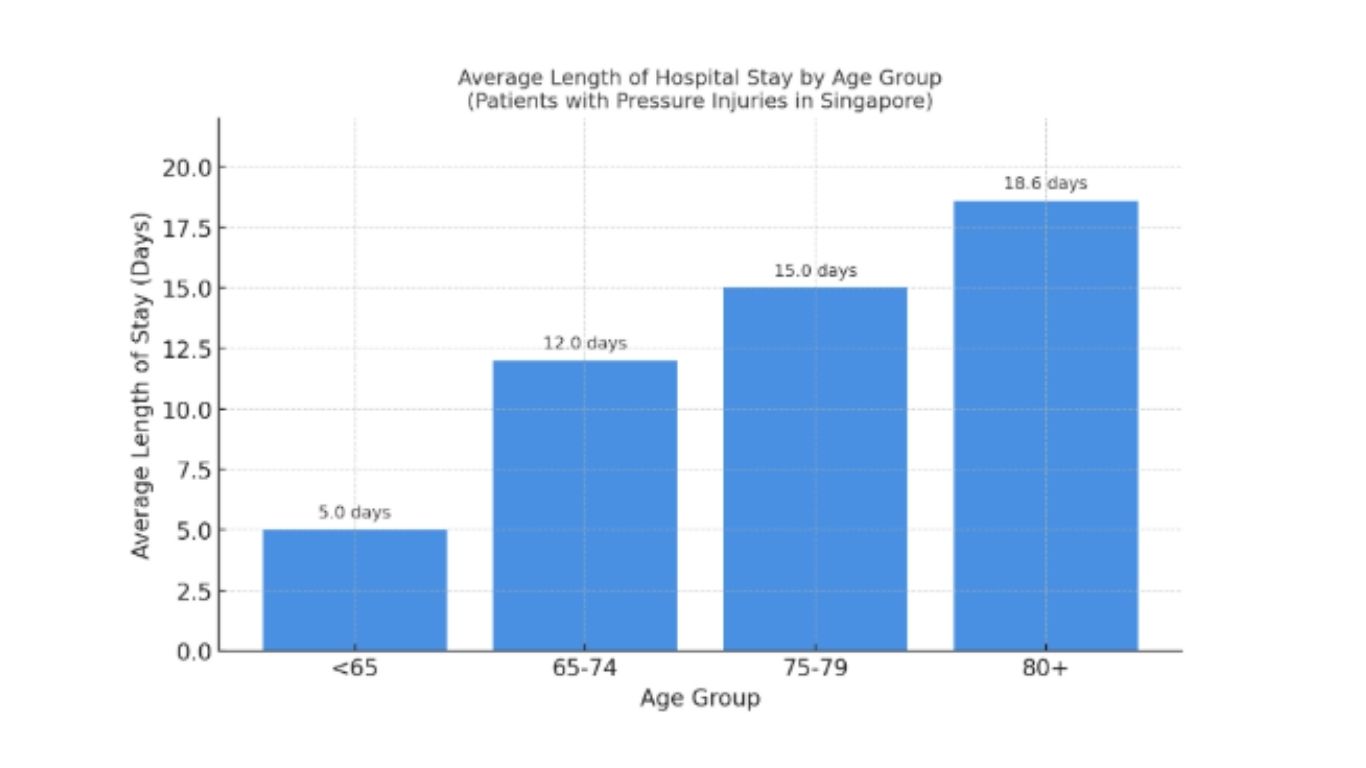
Here are some interesting studies in SIngapore about the impact of Pressure Sores by age, hospital stay, risk and overall trend.
• A 2020 Singapore tertiary hospital study found elderly patients (+65 years) with pressure injuries had the longest average length of stay (ALOS) at 18.6 days, compared to other wound types.
• The eldest patients (80+) faced more than a 4X increase in pressure sore incidence and significantly longer hospitalization.
• A strong trend shows that older patients (65+) with pressure injuries have hospital stays nearly double the national average, underscoring how age intensifies risk and recovery time.
• A local study reported that patients with hospital-acquired pressure injuries stayed about 30 days, while matched patients without them stayed around 6 days
Here is the graph corelating average length of Hospital stay by different age group, to illustrate the risk of longer recovery with age.
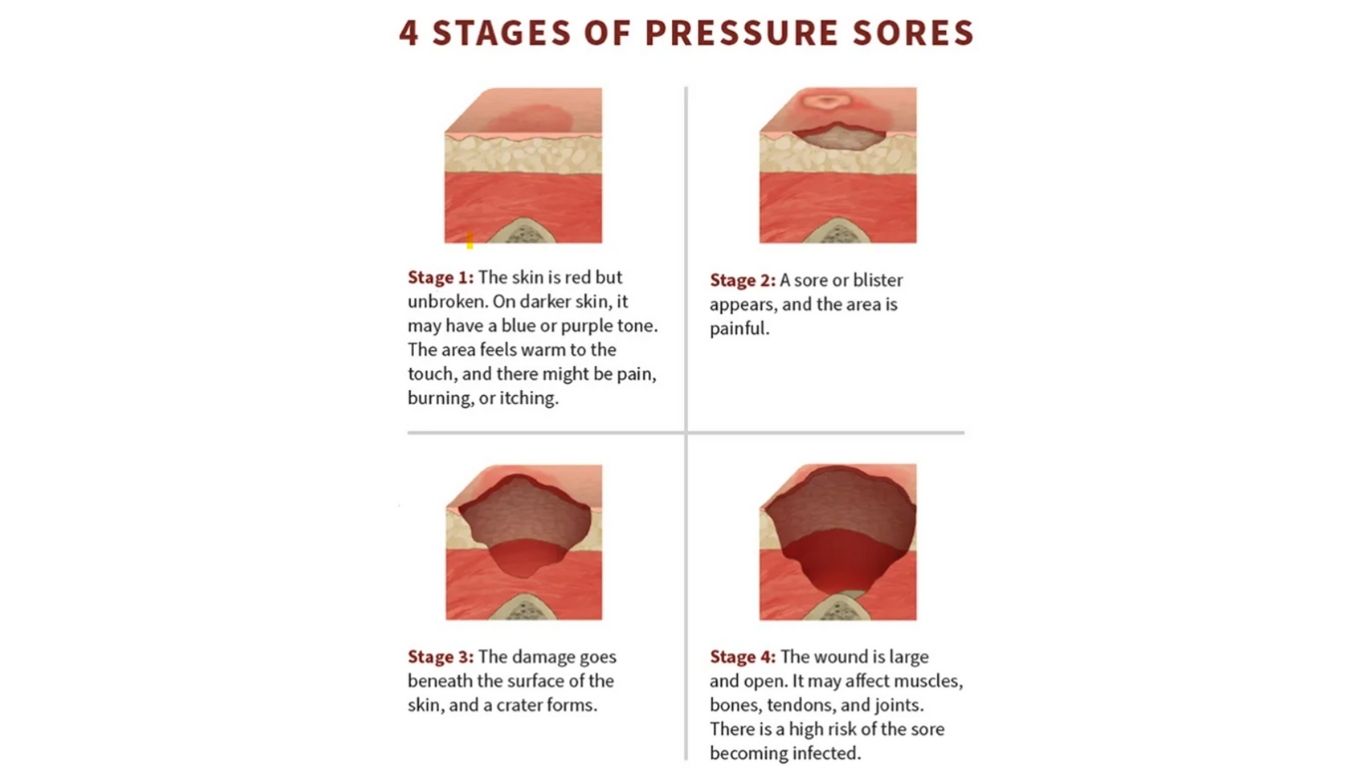
Learning to identify which stage of the sore, helps the caregiver gauge the severity of the situation. Pressure sores are generally classified into four stages:
· Stage 1: Redness that does not fade. Skin may feel warmer, firmer, or softer than surrounding tissue.
· Stage 2: Skin breaks open, forming a shallow ulcer. It may appear as a blister or abrasion.
· Stage 3: Deeper wound extending into the tissue beneath the skin. Fat may be visible, but not muscle or bone.
· Stage 4: Very deep wound exposing muscle, bone, or tendons. High risk of serious infection.
No matter the stage, every pressure sore should be evaluated by a medical professional.
Credit: Webmd
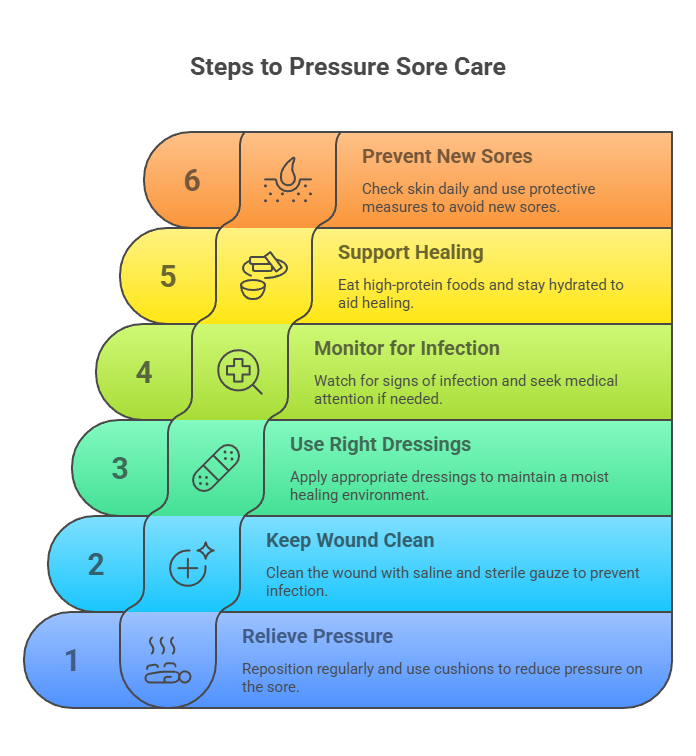
Here is a simplified 6 steps guide to help you care for a pressure sore.
The most important step in pressure sore care is removing pressure from the wound site:
· Reposition the person regularly, at least every 2 hours in bed or every 30 minutes in a wheelchair.
· Use pressure-relieving cushions, heel protectors, or specialized mattresses.
· Avoid dragging the person across sheets, which can cause friction injuries.
Wound cleanliness is essential for healing and infection prevention:
· Clean the wound as directed by your healthcare provider. Saline (salt water) is often recommended.
· Pat the area gently with sterile gauze. Avoid rubbing.
· Ensure the area is dry before applying any dressings.
Dressings help maintain a moist healing environment and protect the wound from bacteria and further trauma. Your nurse or doctor will recommend the right type, such as:
· Foam or hydrocolloid dressings
· Alginate dressings for wounds with excess discharge
· Antimicrobial dressings if there’s mild infection
Do not use unprescribed ointments or creams, as some can delay healing or irritate the wound.
Prompt medical attention is needed if you notice:
· Redness spreading beyond the wound
· Yellow, green, or foul-smelling discharge
· Fever or chills
· Swelling, increased pain, or warmth around the sore
· Blackened (necrotic) tissue
These could be signs of a serious infection requiring urgent care.
Wound healing is slowed in individuals with poor nutrition or hydration. Support the body from the inside by:
· Eating high-protein foods like eggs, tofu, meat, or legumes
· Drinking plenty of fluids (unless restricted by your doctor)
· Taking supplements with zinc and vitamins C and A, as advised
Once a pressure sore heals, the area remains vulnerable. Daily prevention includes:
· Checking skin daily for redness or damage
· Using breathable and absorbent adult diapers or pull-ups base on needs
· Keeping bedding dry and wrinkle-free
· Avoiding tight clothing or friction against at-risk areas
· Ensuring appropriate skincare and moisture barrier creams
Contact your healthcare provider if you observe:
· No improvement after several days of care
· Worsening wound size or depth
· Signs of infection (fever, pus, swelling)
· Increasing pain or foul odour
· Confusion or drowsiness in the individual (could signal sepsis)
Caring for a pressure sore at home requires lots of patience, attention to hygiene, and collaboration with healthcare professionals. While prevention is the best strategy, early care can make a significant difference in healing outcomes.
Never attempt to treat a pressure sore without medical guidance. Every wound is different, and improper care can worsen the condition. Always follow instructions provided by your nurse or doctor.
Reference
· Mount Sinai Health System. Pressure Ulcers. https://www.mountsinai.org/health-library/diseases-conditions/pressure-ulcers
· HealthHub Singapore. Pressure Injury Prevention. https://www.healthhub.sg
· Medical News Today. Bedsores: Causes, Symptoms, and Treatment. https://www.medicalnewstoday.com/articles/176556
· WebMD. Pressure Sores (Bedsores). https://www.webmd.com/skin-problems-and-treatments/guide/bedsores
· Clinical Studies and statistics: https://onlinelibrary.wiley.com/https://onlinelibrary.wiley.com/
Please sign in first.
Sign in
Create a free account to save loved items.
Sign in