

When Men Leak: The Truth About Male Incontinence in Singapore
Posted on11 Sep 2025
Worried about leaks but not willing to talk about it? Research have shown that 1 in 4 men over the age of 40 in Singapore experience bladder control issues, yet very few talk about it.
While male incontinence can feel like an embarrassing topic, it is more common than most think. The good news is that it can be treated, managed, and lived with confidently.
Many men assume bladder problems are something only women face. In reality, conditions related to the prostate, ageing, or even lifestyle choices make men just as vulnerable. For some, incontinence shows up as a small dribble after urination. For others, it may feel like the bladder never empties fully. Men who undergo prostate surgery may also find urine loss happening unexpectedly.
Ignoring the problem does not make it disappear. Male incontinence can affect confidence, sleep quality, social activities, and even intimacy. Recognising what is happening in your body is the first step to regaining control.
1. Stress Incontinence – Leakage occurs when pressure is placed on a weakened bladder, such as during coughing, sneezing, laughing, or lifting.
2. Urge Incontinence – A sudden and strong need to urinate that is difficult to control. The bladder may contract without warning, leading to leaks.
3. Urinary Frequency – Needing to urinate more often than normal, disrupting daily routines.
4. Overactive Bladder – A combination of urgency and frequency, sometimes it comes with urinary leaks.
5. Overflow Incontinence – When the bladder cannot fully empty, often linked to an enlarged prostate, causing small but frequent leaks.
For men, the most common causes are linked to the prostate:
• Prostatitis: Inflammation or infection of the prostate, more common in younger men.
• Benign Prostatic Hyperplasia (BPH): An enlarged prostate that presses against the urethra, restricting urine flow. This affects about 1 in 4 middle-aged men.
• Prostate Cancer and Treatments: While the cancer itself may not cause leakage, treatments such as surgery or radiotherapy often do. Most men regain bladder control within 6 to 12 months, though some may continue to experience symptoms.
• Nerve damage from conditions such as Parkinson’s disease, diabetes, stroke, or spinal cord injury.
• Obstruction in the urinary tract caused by tumours or bladder stones.
• Urinary tract infections.
• Age-related changes that weaken bladder and urethral muscles.
• Lifestyle factors such as being overweight or smoking.
• Family history of bladder issues.
Some cases of urinary incontinence are short-term and triggered by diet, medication, or illness. Examples include:
• Diuretic foods and drinks such as alcohol, caffeine, sparkling water, or spicy food.
• Certain medications including blood pressure drugs, sedatives, or muscle relaxants.
• Constipation, which presses on the bladder and disrupts nerve signals.
• Urinary tract infections, which irritate the bladder and increase urgency.
Early diagnosis is important. Doctors recommend annual prostate checks for men above 50, and from 40 if there is a family history of prostate cancer.
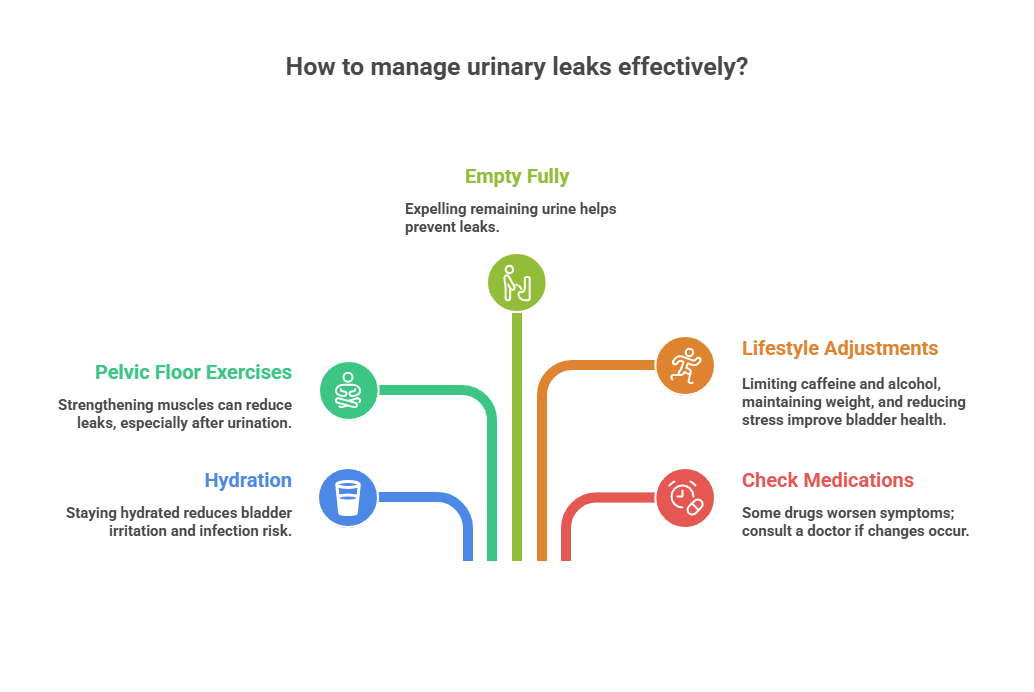
• Stay hydrated: Concentrated urine irritates the bladder and increases risk of infection.
• Pelvic floor exercises: Yes, men can strengthen these muscles too, to reduce leaks, especially after urination.
• Empty fully: Pressing gently behind the scrotum can help expel remaining urine.
• Adjust lifestyle habits: Limit caffeine and alcohol, and avoid drinking large amounts before bedtime. Maintaining a healthy weight, exercising regularly, and reducing stress also help bladder health.
• Check medications: Some drugs worsen urinary symptoms; consult your doctor if you notice changes.
Incontinence is not only physical. It can affect confidence and emotional wellbeing. Many men reduce social activities, avoid travel, or struggle with intimacy because of embarrassment. Yet incontinence is common, manageable, and treatable.
Speaking to a doctor early opens up a range of solutions, from lifestyle changes to medications and surgical options.
Male incontinence does not have to define your daily life. At TrueHugz, we design adult tape diapers and pull-up pants that are soft, breathable, and highly absorbent, created for Singapore’s hot and humid weather. Our mission is to support both men and women in living with confidence, free from worries about leaks, odour, or skin discomfort.
If you are ready to take back control, consider requesting a free sample from TrueHugz today.
Reference
• Mayo Clinic. Urinary Incontinence in Men: Symptoms and Causes. https://www.mayoclinic.org
• Cleveland Clinic. Urinary Incontinence in Men. https://my.clevelandclinic.org
• Urology Care Foundation. Male Urinary Incontinence. https://www.urologyhealth.org
• NHS. Urinary Incontinence: Overview and Treatment. https://www.nhs.uk
• HealthHub Singapore. Understanding Urinary Incontinence. https://www.healthhub.sg
• National Association for Continence (NAFC). Talking to a Loved One About Incontinence. https://www.nafc.org
Please sign in first.
Sign in
Create a free account to save loved items.
Sign in