Categories
Search

Understanding the Different POV: Men vs. Women

Posted on18 Mar 2025

Incontinence affects individuals differently, and men and women often respond to it in unique ways due to societal norms and personal beliefs. Here’s how their perspectives differ and how to support them effectively:
Men and Incontinence: Breaking the Stigma
For many men, incontinence can feel like a loss of control, challenging the societal expectations of masculinity. A friend of mine, a 50-year-old man, once confided in me about his struggle with incontinence. He was offered a sample adult incontinence product but refused to use it. Instead, he resorted to inadequate solutions like women’s sanitary pads, which only left him feeling frustrated. His reluctance was rooted in embarrassment and a fear of admitting vulnerability, as he was unwilling to discuss his condition openly.
How to Help:
Normalise the Condition

Remind men that incontinence is more common than they might think, and it is a manageable condition with the right knowledge and support.

Offer Practical Solutions
Introduce discreet, functional products, highlighting that there are advanced and high-quality solutions designed to be visually “invisible” to others, allowing them to maintain their confidence.
Encourage Professional Guidance

Frame seeking medical advice as a proactive and strong decision, reassuring them that consulting a healthcare professional is an important step in managing the condition effectively. Seeking help is a sign of strength and courage.

Women and Incontinence: Reclaiming Confidence

For many women, incontinence can feel like a blow to their self-image, self-esteem, or even their ability to care for others. Often, they prioritise caregiving roles, and may avoid addressing their own needs for fear of burdening others. For example, a mother I know stopped attending social events because she feared experiencing an accident and troubling others, which led to isolation and a decline in her sense of self-esteem.

How to Help:
Create a Safe Space
Encourage open conversations about their experiences. Many women when provided with a safe and non-judgemental space, may feel more comfortable discussing their struggles with incontinence.
Focus on Empowerment

Present incontinence products as tools for reclaiming freedom and mobility, enabling them to live life with confidence and ease. Give them options where they can make decisions such as choice of products to try.

Encourage Professional Guidance

Share helpful tips to engage them, or talk to a support group who had similar experience, while always encouraging them to consult healthcare specialist to diagnose the root cause and find the effective solutions.

Helping Loved Ones Move Forward
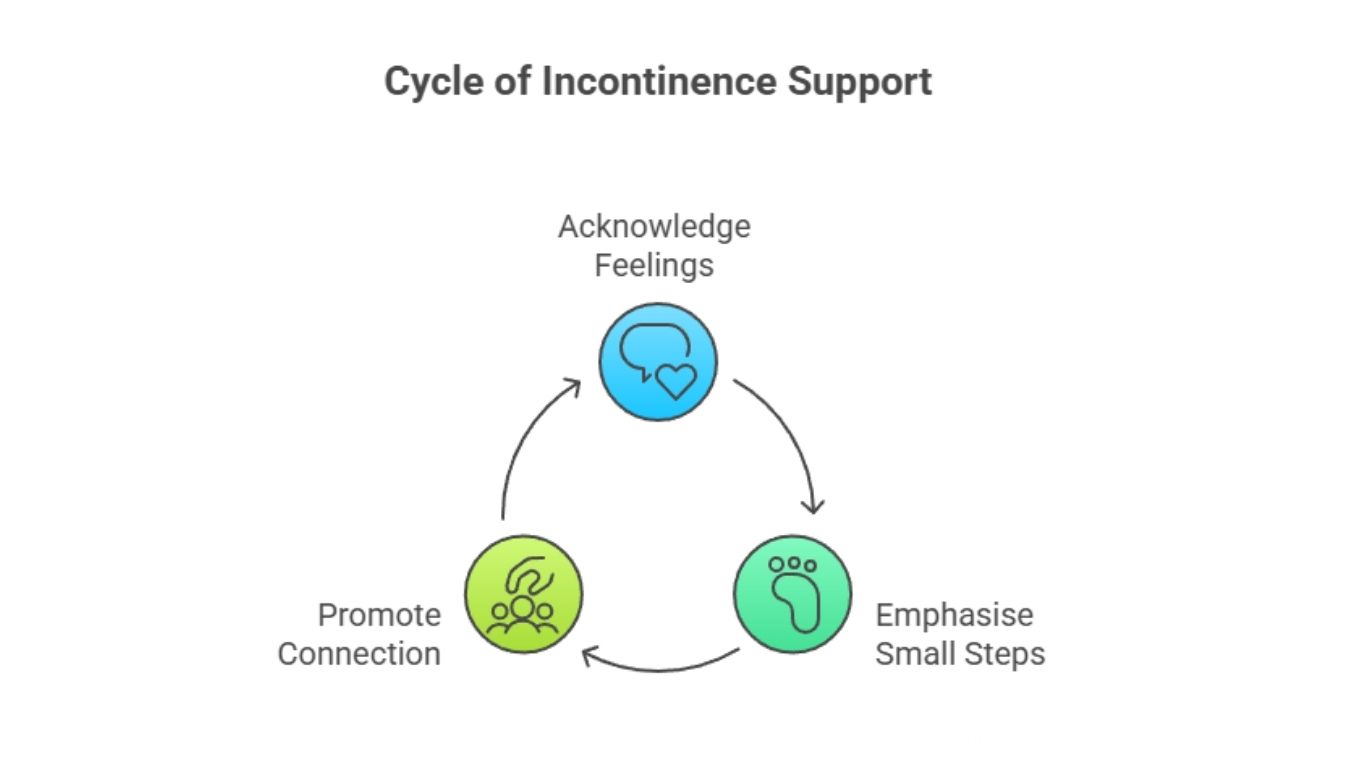
Regardless of gender, the key to supporting someone with incontinence is addressing emotional barriers and emphasising solutions:
Acknowledge Feelings
Validate their emotions and share stories of others who’ve successfully navigated similar challenges.
Emphasise Taking Small Steps
Encourage trying discreet, reliable products that can help manage incontinence comfortably and with ease. Reassure them that managing the condition can be simple with the right products, or suggest consulting a specialist for personalised guidance.
Promote Connection
Suggest support groups or communities for shared understanding, motivation, and encouragement from others going through similar experiences.
By fostering empathy and providing practical tools, you can help your loved ones break free from the cycle of living with inadequate solutions and regain their confidence.

Reference

• National Association for Continence. (n.d.). Talking to a Loved One About Incontinence. https://www.nafc.org
• Mayo Clinic. (n.d.). Urinary Incontinence: Causes and Treatments. https://www.mayoclinic.org
• Alzheimer’s Association. (n.d.). Dementia and Incontinence. https://www.alz.org

Menu

Create a free account to save loved items.

Sign in